Structural steel is at the foundation of modern infrastructure projects. For engineers the quality of structural steel fabrication determines the load tolerance and safety.
As a contractor the fabrication efficiency affects project timelines and worker safety. This process also plays a key role when it comes to erection efficiency and cost control.
A better knowledge of the structural steel fabrication processes thus enables all stakeholders to prevent costly errors and work in a more efficient manner.
This blog explores the ins and outs of structural steel fabrication in detail. This blog will help you grasp how this process works. It also highlights what a contractor or engineer needs to keep in mind to ensure the success of every project that involves structural steel. So, stay with us till the very end.
- What is Structural Steel Fabrication?
- Structural Steel Fabrication: Complete Step-By-Step Process
- Key Considerations for Engineers and Contractors
What is Structural Steel Fabrication?
Structural steel fabrication refers to an innovative approach that converts raw steel material into sturdy structural components. These components meet strict engineering design and project specifications.
Research reveals the structural steel market is expected to grow from USD 179.04 billion in 2025 to USD 195.5 billion in 2026 with an impressive CAGR of 9.2 %.
Typical structural steel fabrication is a combination of multiple disciplines. These include
- Structural engineering
- Metallurgy
- Welding technology
- Quality control
In this process you cut, shape, and then assemble steel components to create durable frameworks for large buildings and industrial facilities. This type of fabrication demands a greater precision as well as adherence to engineering designs which makes it different from normal steel construction.
Key Features
The following are the main features that set structural steel apart.
- This steel possesses a very high tensile and compressive strength as well as a greater load capacity.
- Structural steel elements give you greater design flexibility. These elements come in complex geometries that meet your every structural requirement.
- Quality structural steel elements can last you for decades with minimal upkeep.
- This recyclable material aids your sustainable construction efforts.
- The process precision along with multiple quality checks make structural steel elements a lot safer.
Main Structural Steel Components
Another report suggests more than 43% to 44 % of structural steel fabrication goes into the construction sector. This report also shows that the automotive and other sectors that use this steel also show a strong projected growth with a CAGR of 7-8%.
The following are some of the most common structural steel components that engineers or contractors often come across.
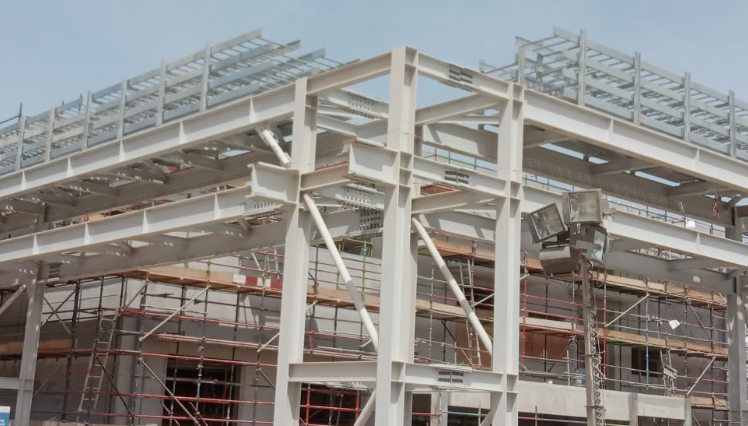
- Beams and Girders
These are horizontal steel members that support heavy loads.
- Columns
These come in vertical shapes with high load-bearing capacities.
- Bracing Systems
These are either diagonal or cross-bracings that provide lateral stability in construction.
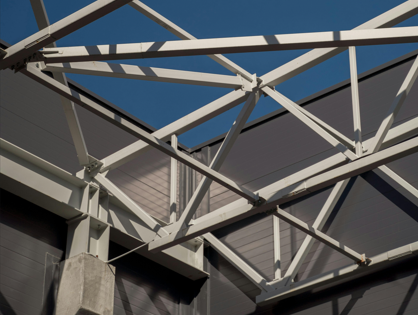
- Trusses and Frames
These Pre-engineered assemblies provide stability in long spans.
- Base Plates and Connection Plates
These steel elements create an interface between steel and concrete for better support.
- Stairs, Handrails, and Secondary Steel Elements
Structural steel elements play a big role in these functional as well as safety components in your buildings.
Structural Steel Fabrication: Complete Step-By-Step Process
This section lists several key steps that a typical structural steel manufacturing process involves.
- Design and Detailing
The process of fabrication begins with detailed calculations. Designers develop initial concepts and use 3D modelling to help manufacturers visualize the results. This helps fabricators ensure all loads are accurate and according to the local building codes.
The design development involves a look into the impacts of dead, live, or seismic loads. Other things like load paths or structural behaviors also play a part.
With the help of this data, designers give fabricators information about the steel member sizes, hole locations, bolt grades, and erection sequences. This helps fabricators create elements that give you the greatest structural strength.
- Steel Grade Selection
Next up is the selection of the right steel grade. Factors like load requirements or environmental exposure play a key role in this decision. You also need to consider costs as well as welding methods to pick the right steel grade.
The right material type ensures greater safety as well as regulatory compliance.
- Cutting and Shaping
After the design the structural steel manufactures cut the raw steel sections. They use high-precision equipment to shape the steel elements in specific dimensions.
The following are some common cutting tools that fabricators use.
- CNC plasma and laser cutting
- Oxy-fuel cutting for thick sections
- Automated saw cutting
These tools ensure uniform or precise cutting which leads to better alignment and reduces the need for rework.
- Drilling or Punching
In this step the fabricators use punching machines or CNC drills to create bolt holes or connection details in structural steel elements. The quality as well as erection speed rely heavily on the precision of this step.
Accurate drilling facilitates correct bolt alignment and better load transfer efficiency.
- Welding
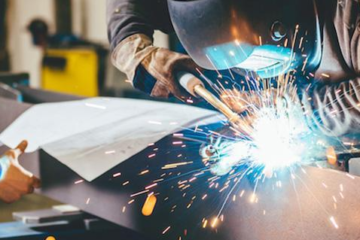
In this step manufacturers join smaller steel components together with electric arcs which melt the parent material into the joints. A consumable electrode filler material also melts with the parent material, which creates a molten weld pool. This fuses different components together, which prevents residual stress. Common welding methods include the following.
- MIG (Metal Inert Gas)
- TIG (Tungsten Inert Gas)
- Stick welding.
- Surface Preparation
In this step you need to take measures to protect the steel elements from corrosion. Fabricators typically blast the steel to remove contaminants. They also apply primers or multi-coat paint systems to add an extra layer of protection. For long-term safety in harsh conditions, they use hot-dip galvanizing. This keeps steel elements in the best shape even after continuous exposure to environmental hazards.
- Quality Assessment
After the fabrication finishes the fabricators use strict quality control measures to ensure the steel is up to code. They verify dimensional accuracy. They also perform visual weld inspections. They also conduct coating thickness measurement. Finally they create documentation that lists these inspection results which helps with approvals or audits.
- Assembly and Packaging
Finally the manufacturers label and package the steel elements. These elements then arrive at the site. Based on the construction requirements and the steel element sizes contractors create lifting plans or erection sequences. Finally, they join different steel structures together to create larger ones that serve as foundations for your future construction steps.
Key Considerations for Engineers and Contractors
This section deals with a few considerations for engineers or contractors that are crucial when it comes to structural steel fabrication.
- Engineers can engage early with steel fabrication experts to come up with better designs that have realistic load tolerances.
- Contractors can consider fabrication or erection constraints to come up with better transportation, crane capabilities, and assembly sequences.
- Designers or developers can coordinate with steel fabricators to standardize connections. This enhances consistency as well as construction speed.
- Engineers can define and communicate clear data about the required tolerances, connection design responsibility, and surface treatments to fabricators, which leads to better structural strength.
- Coordination with steel fabricators can help developers decide on lifting points and sequence the steel delivery as per the erection order.
Conclusion
Structural steel fabrication is a sophisticated process that has a lot of influence on the efficiency of a construction project. As an engineer you must design components with fabrication quality in mind. Contractors also need to plan the steel erection as well as logistics according to the specifications of the structural steel elements.
A deep knowledge of the structural steel fabrication process fosters collaboration among designers and builders, which leads to lower safety hazards and much faster project delivery.
Visit us at PSI Power Solutions to get the best structural steel fabrication solutions for all industrial or urban development applications.
FAQs
Which project types utilize structural steel?
The common applications include
- Commercial buildings
- Warehouses
- Factories
- Bridges
- Industrial facilities
- Mining equipment
- Power transmission towers
What makes industrial structural steel fabrication different from regular steel fabrication?
Industrial fabrications involve the use of heavier materials and larger components. It also adheres to stricter safety or performance standards.
What are common types of structural steel frames?
There are four common steel frame structures namely basic building frames, portal frames, grid structures, and truss structures.
What steel types do manufacturers use for structural steel?
Popular steel grades for this purpose include ASTM A36, ASTM A500, ASTM A572, ASTM A588, etc.
Which processes are a part of structural steel fabrication?
The following are the main processes that commonly take place in structural steel fabrication.
- Cutting
- Drilling
- Bending
- Welding